
Core Drilling Scan in Florida
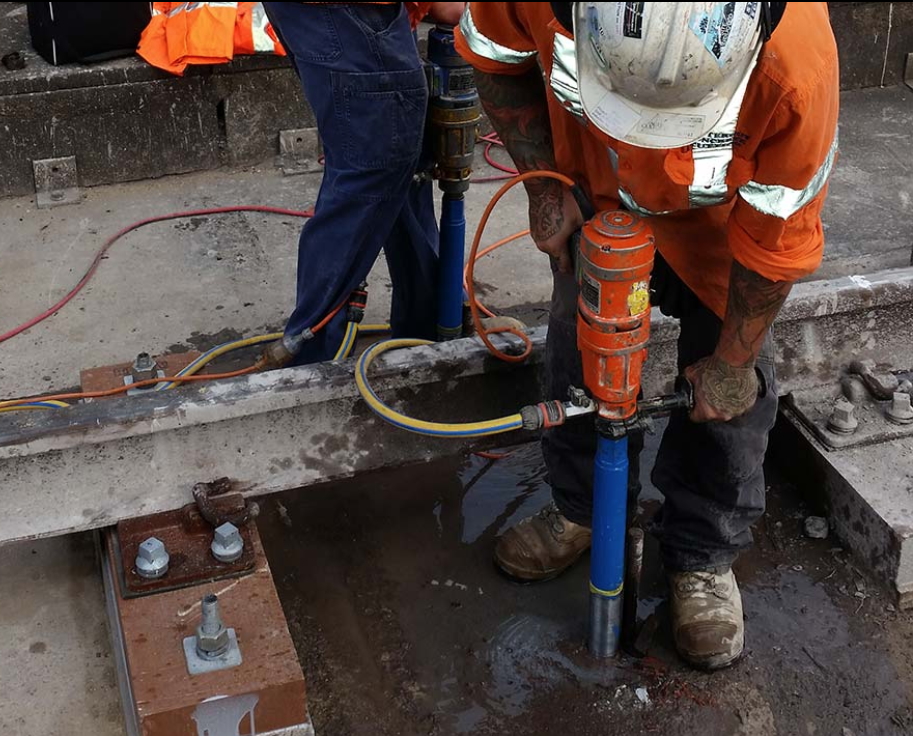
Before your core rig hits the slab, someone needs to check what's inside. Rebar in the wrong spot bends your bit and ruins the core. A post-tension cable strike stops the project and can injure workers. A severed conduit kills power, floods the floor, or cuts the building's data lines. A pre-core GPR scan identifies conflicts at each drill point before work begins — and takes far less time than the repair.
When to Call Before Coring
- Single-point cores — MEP penetrations, drain lines, duct sleeves, or single pipe pass-throughs
- High-volume core programs — 10, 50, or 100+ holes on a multifamily tower, hospital, or retrofit project
- Post-tensioned slabs — any slab suspected to contain PT tendons requires scanning before any core
- Older buildings — no drawings, outdated drawings, or buildings with documented utility rerouting history
- Occupied facilities — hospitals, hotels, schools, and occupied offices where a utility strike shuts down an active floor
- Any core into a structural element — beams, columns, shear walls, or transfer slabs
What We Check at Each Core Location
For each planned drill point, we scan a grid around the proposed center — typically 18 to 24 inches in each direction. We check for:
- Rebar position relative to the core diameter
- Post-tension tendon paths that may pass through the drill zone
- Embedded conduit or plumbing lines below or through the slab
- Slab thickness at the target location
We then mark each core location as clear, marginal (needs shift), or avoid — and we explain the finding directly to the drill operator or foreman.
How It Works in the Field
- Arrive at site with drawings or layout plan if available
- Set up scan grid at each core location or across the full core program area
- Collect and interpret data in real time using the GSSI StructureScan Mini
- Mark each core point: green for clear, yellow for caution, red for conflict
- Brief the drill operator on each mark before the rig moves in
- Identify alternate locations for any conflicted core points
What You Receive
- Color-coded paint marks at each core point on the slab surface
- A verbal briefing with the drill operator or foreman
- On request: photo record of each scan location for turnover or QA documentation
- On request: written reference notes for project manager or superintendent review
Schedule Your Pre-Core Scan
Send the number of core locations, the slab type, and your drill date. We will confirm scheduling and arrive ready to work.
Request a Core Drilling ScanFrequently Asked Questions
Related services: GPR Concrete Scanning | Post-Tension Cable Scanning | Rebar Scanning | Top Mistakes Before Core Drilling